
5 lessons I learned from Trillion Dollar Coach
No matter how successful you are, coaching can add value

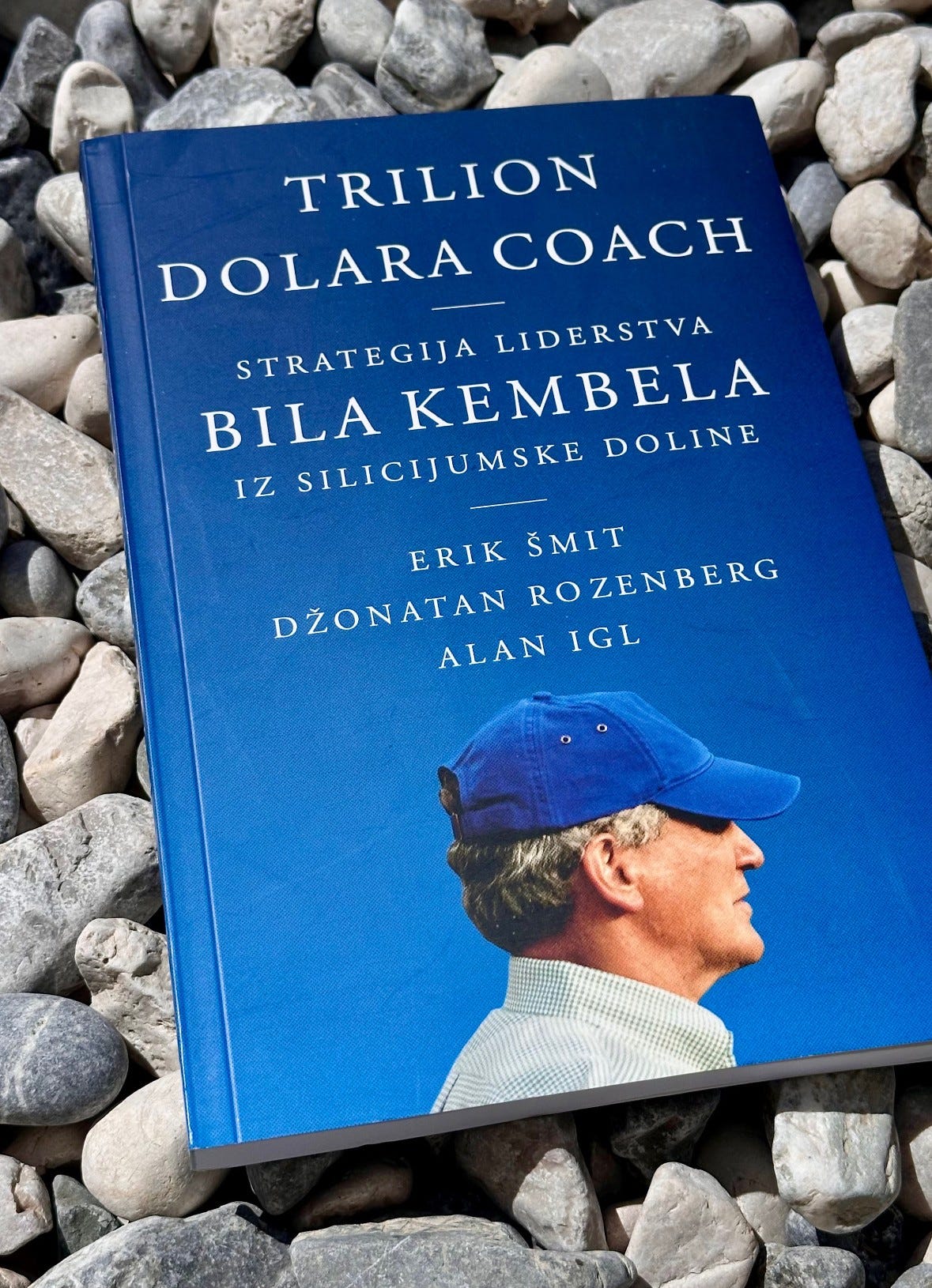
During my summer vacation, I decided to read a book titled “Trillion Dollar Coach,” written by three Google executives about Bill Campbell. He was a football coach who later coached the leaders and executives at Apple and Google, including Tim Cook and Eric Schmidt.
As a coach myself, I tried to read the book from two sides, as an engineer and a coach. What I found most useful is the order of operations: build trust first, then attack the task, because if you have any disagreements, they will be cheaper to resolve if you make decisions quickly.
Another thing I learned from Bill is that people are more important than technology, and that any manager's top priority should be the well-being and success of their people.
In this issue, we will talk more about:
How his 1:1s ran
Why our incentives push the opposite way
Where trust-first can break
What would I copy on an engineering team from Monday
So, let’s dive in.
1. A losing coach in the org chart
This book is a story about a person who was a football coach and brought his wisdom to tech, primarily at Intuit, Apple, and Google. Campbell captained Columbia's Ivy League title team, then spent fifteen years coaching football at Boston College and Columbia. The Columbia years went badly, and he blamed his struggles on being too sensitive to his players' feelings.
At 39, he decided to switch careers and start his job in sales and marketing at Apple when the 1984 Super Bowl ad aired. Later, at 60, he became the CEO of Intuit in 1994 and of Kleiner Perkins in 2000, coaching executives at its portfolio companies. He spent his last sixteen years coaching Steve Jobs, Larry Page, Jeff Bezos, Eric Schmidt, and Sheryl Sandberg.
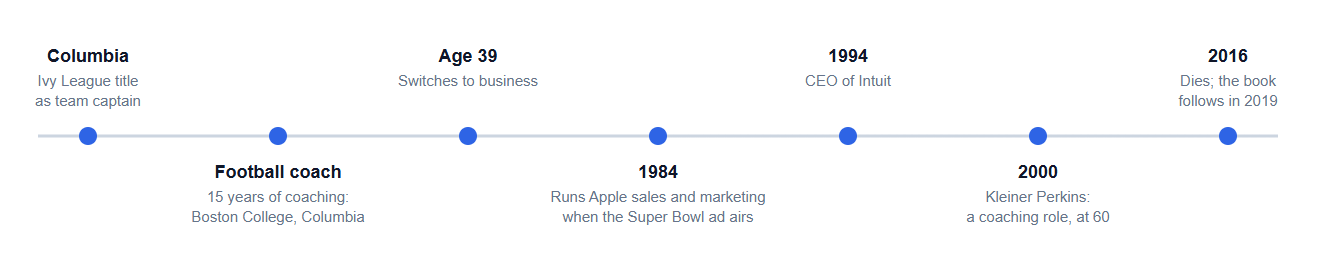
He died in 2016, and three Google executives who worked with him for years, Schmidt, Jonathan Rosenberg, and Alan Eagle, turned his methods into a book in 2019.
At his memorial, his golf caddie from Cabo San Lucas was near the family, and Tim Cook and Eddy Cue from Apple. This says more about Bill than the trillion-dollar title does.
Now, why I decided to do coaching. At one of my past companies, I had a boss who was sincere about some of the issues I had and recommended that I work with an external coach to address them. Then I started a coaching journey that lasted more than one year. In this process, I found that it was much more powerful than mentoring, because mentoring usually fails when someone not in your position gives you advice. Coaching does something different: it guides you with questions, and you find your own answers. I felt this is the right way.
Then, in 2023/2024, I decided to certify as a high-performance and career coach.
This book is a natural follow-up for me to learn how great coaches do their job.
This is the power of coaching in general: the ability to offer a different perspective, one unaffected by being “in the game.”
2. One hour inside Bill's 1:1
The thing that Eric Schmidt learned from Bill was that when he opened his Monday 1 p.m. staff meeting at Google, he asked people what they did over the weekend. Larry Page and Sergey Brin were in the room watching that. When he came back from his business trip, he put a map on the screen with pins marking the cities he had visited and gave his own trip report.
The point here is that this was no accident; he planned it. He wanted to get people into the room as humans before doing the real work. This is something Bill taught everyone: people come first, then work.
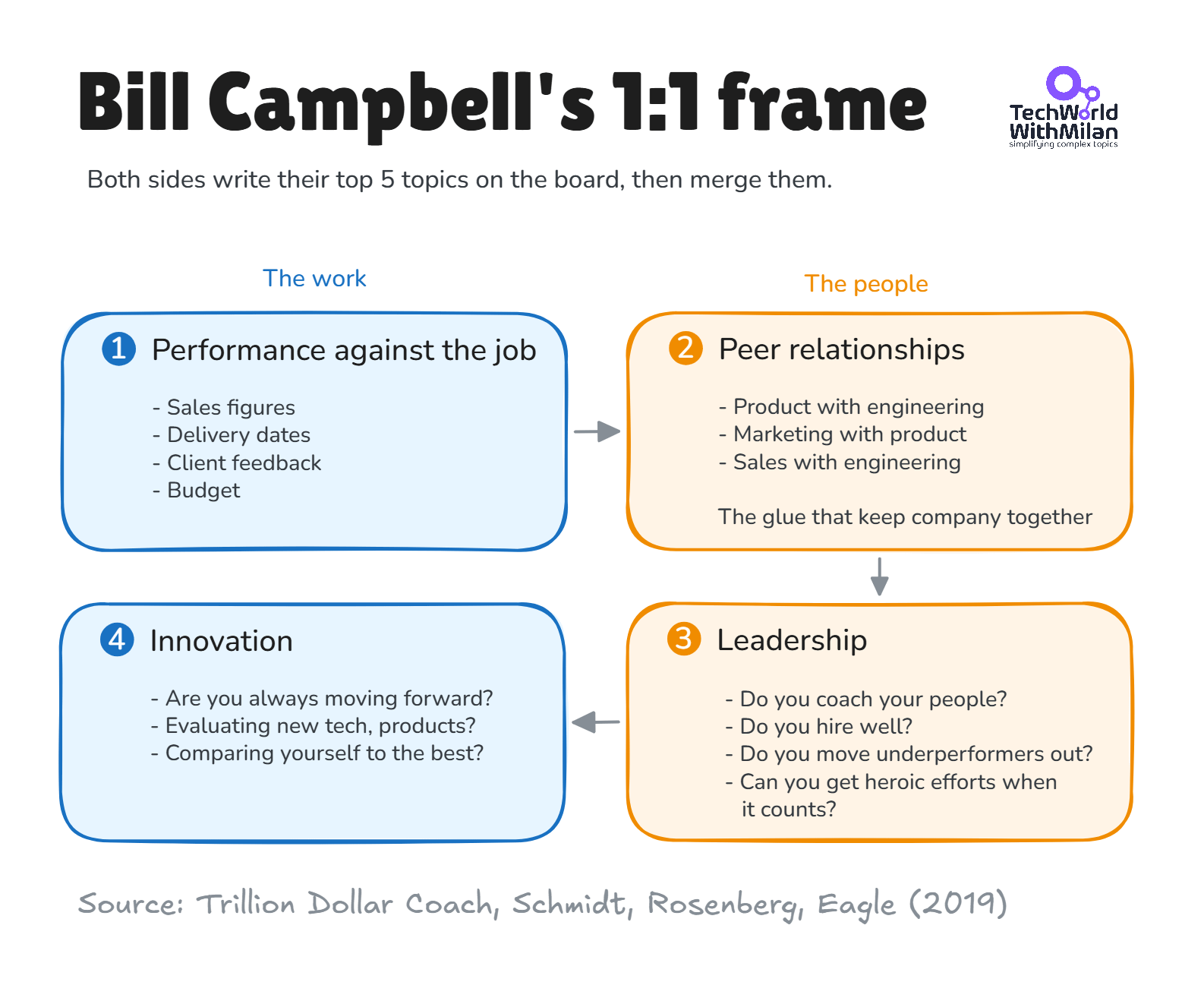
His 1:1s had more structure than this. Bill wanted both people to write their top 5 topics on the board and merge them. This very act of merging shows you what the other person thinks matters. From there, the conversation was usually as follows: performance, sales figures, delivery dates, client feedback, and budget numbers. Then, of course, peer relationships that glued the company together.
In the end, he asked coaching questions: do you coach your people, do you hire well, do you move underperformers out, can you get heroic effort out of the team when it is important.
When Jonathan Roseberg complained that founders gave no feedback, Campbell told him that what your peers think of your work is more important than anything else.
We also sat in on Eric’s staff meetings just to observe. He read body language and changes in the mood. He could see the whole board because he was not playing the game. I see the same in my coaching: the vantage point, more than the advice, is the product.
But it’s important to mention that trust work like connection keep-alive. The handshake is expensive, so you pay for it once and hold the connection open with pings. Trip reports and real small talk are the pings.
When you have warm connections, you can push back on hard disagreements without having to rebuild relationships every time. Teams that don’t have this avoid having difficult decisions.
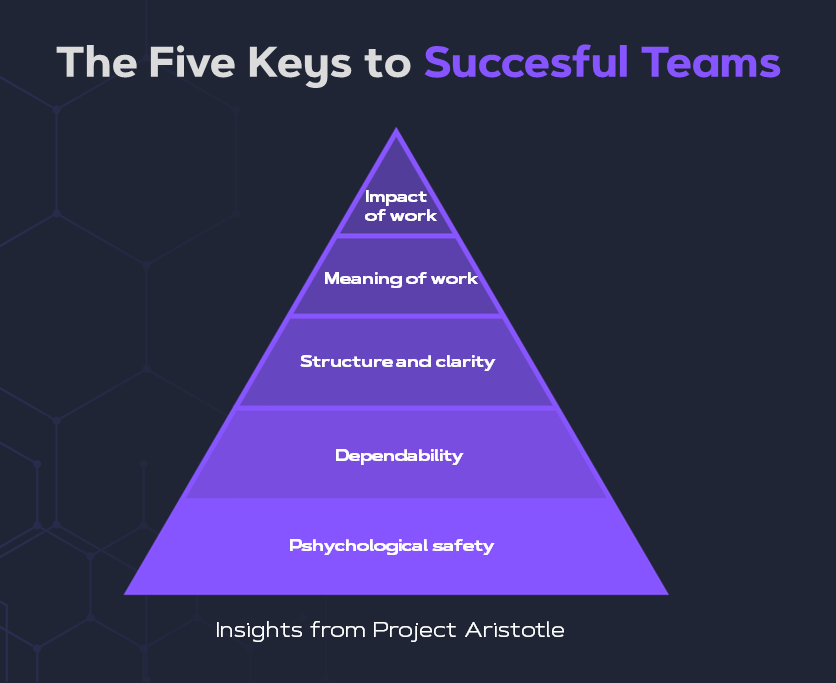
Google project Aristotle backs this up. Project Aristotle ranked psychological safety as the top factor in team performance, ahead of skill composition, and safety comes from trust: people who can afford to be wrong in front of each other.
Learn more about my exceptional 1:1s

3. Where trust-first breaks
I saw many 1:1s that were not working their purpose. The first ones are quiet ones. They happen every week, but they are just status meetings. They never reveal the true story. Sometimes we hear it first on exit interviews.
Then I saw 1:1s that were pleasant, with no issues, but weak decisions. Campbell hated consensus and instead pushed for the best idea, which requires open argument. Trust is what makes argument affordable.
Then I saw something I call "protected genius." You know those ones who are hard on people but high performers. We tolerate them and even shield them from the consequences of their bad behavior, while they remain unethical or abusive.
Campbell used feedback for a review season. He gave it at the moment and in private when it was negative. When Jonathan Rosenberg first met Campbell and shrugged that it depends on the coach, Campbell stood up to leave: "You can't do coaching with smart-asses." Coaching demands more vulnerability than business normally allows, because the coach's job is to show you the flaws you cannot see from inside, and that only works with honesty and humility on your side.
As I coach, I always check this first, and Campbell's red flag remains the best test I know. If you have more answers than questions, you stopped learning. And I saw this more than I wanted.
Campbell's constant encouragement worked because it came attached to the hard question. People knew he pushed from their side of the table. His version paired belief with a push: he believed in people more than they believed in themselves, then made them act on it.
A leader who expects loyalty while keeping information, or who blindsides people in public, has a one-way keep-alive. The connection will drop anyway.

4. What I would run on Monday
What I have found in my career, and in coaching, is that culture change comes through small changes.
If you are an engineer, try to take over your 1:1s. Write down your five topics before the meeting and ask your manager for theirs (drive the agenda and be proactive). The merged list will become a great place for a working session between you two. Then, you can pick two peers and ask them one question adapted from Google's own review survey: over the last few months, did I collaborate effectively with you, and where did I put obstacles in your way? This is valuable because peers see things your manager cannot. Bruce Chizen, who worked with Campbell at Claris and later ran Adobe, built the habit by force: learning names, opening elevator conversations, having lunch with new hires. It felt artificial to him, but it worked anyway.
If you are a leader and run a team, spend the first five minutes off-task. Ask people what they did last weekend, where they traveled, or thank them for something specific they did last week. This will make your connection warm.
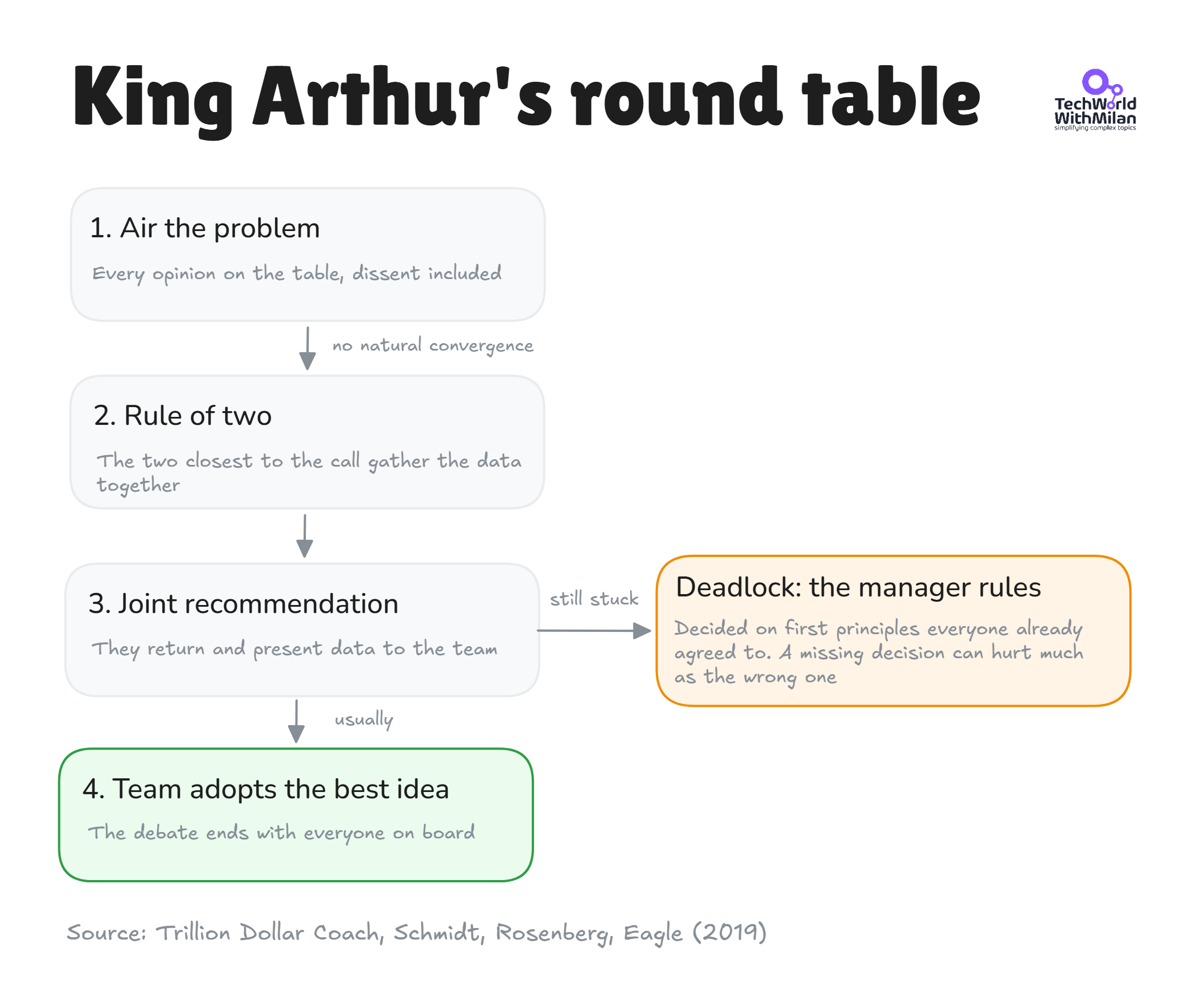
For deadlocks, run Campbell's rule of two: the two people closest to the disagreement gather the data and come back with a joint recommendation, and you only decide if they fail. He called the wider model King Arthur's round table: the knights argue it out and usually converge, and the king rules only when they cannot, since standing still can cost as much as a wrong call.
Campbell also drew a hard line where trust lives in product work. At Intuit, a product manager whom he had hired from baking handed his engineers a list of features to build. Campbell said to him that anyone who tells an Intuit engineer which features to build will be fired. Bring them customer problems and context around it, and let them find and build the features. This is what we call product-minded engineering today.
And one coaching move any manager can use. If anyone asks you for advice, they often only want approval and have prepared questions. Do what Campbell did, and Ben Horowitz still does with his fund’s CEOs, and that is to refuse such questions and keep asking your own until the real problem shows up.
When you give direction, tell it like a story from your own career, then as a direct instruction. People like to commit to conclusions they reach themselves, and this is a power of coaching.
5. You have the title, but your people decide the rest
Campbell said this in one line: "Your title makes you a manager, but your people make you a leader." Leadership is granted by the people you lead, and they grant it on trust.
Do you need this? If you lead a team, yes. Give it a few months, and it pays for itself (a guess from experience, not a study). If you work alone, you're on a short contract, or you're in the middle of a live incident, skip the rituals and get the job done. Nobody will blame you.
So here is the audit I would run. Open next week's calendar and count the minutes booked against tasks versus those booked against people. That ratio is your management philosophy, regardless of what your slides say.
The book is Trillion Dollar Coach by Eric Schmidt, Jonathan Rosenberg, and Alan Eagle.
📔 The Laws of Software Engineering book is out
The book began as a document I wrote over the years. During my 20+ year career in Tech, I saw the same things happening at companies with different technologies and teams. I wrote down what I saw. I learned about Galls Law from a project that did not work out. Brooks’ Law was observed in a team that grew larger, and everything slowed down. Goodhart’s Law arose from a time when we met all our goals, yet the results were no better. They have been even worse.
Later, I met engineers who had figured out the same things. Most of them learned these lessons the hard way, as I did. They had a failed project, a tired team, or a messy codebase. This is how engineers usually learn these lessons because no one tells them. It is true, and it costs a lot.
This book is a list of what I learned.
This issue covers 20 laws in software engineering. My book covers 56 laws across architecture, people, time, quality, scale, code, and decision-making.
Each chapter discusses what the law says, where it comes from, when it applies, and what it looks like in a project. Some chapters also include connecting ideas such as The Two-Pizza Rule, The Cobra Effect, and Impostor Syndrome.
This book is something you can keep at your desk and look at when you need help.
Forewords are written by Dr. Rebecca Parsons, CTO Emerita at Thoughtworks, and Addy Osmani, Engineering Director at Google Cloud AI. Reviewed by 20 engineers and leaders from Google, Amazon, Uber, Oracle, Yelp, Nutanix, and CodeScene.

Want to advertise in Tech World With Milan? 📰
If your company is interested in reaching founders, executives, and decision-makers, you may want to consider advertising with us.
Love Tech World With Milan Newsletter? Tell your friends and get rewards.
Share it with your friends by using the button below to get benefits (my books and resources).
the line I keep coming back to is that disagreements get cheaper when trust is already there.. but running teams remote you feel the inverse fast