
From invisible engineer to trusted expert on LinkedIn
How I grew from 2k to 260k followers and built a career safety net in two and a half years

Three years ago, my LinkedIn looked like a static CV, as did most people's (I registered originally on the platform in 2007). Fewer than 2,000 people followed my work, and nothing I posted travelled beyond a small circle of colleagues.
Fast-forward to today: I’m a Top 100 LinkedIn creator with over 264,000 followers, my posts regularly rack up thousands of reactions, and I’ve leveraged LinkedIn to become a recognized authority in tech.
How did I transform from an “invisible” engineer into a trusted expert on the world’s largest professional network? This story will reveal my path and the playbook for mastering LinkedIn as an engineer, from mindset shifts and profile tweaks to content systems and community engagement.
In particular, we will talk about:
Why LinkedIn matters for tech people. LinkedIn isn’t a resume site anymore. It’s a publishing platform where your ideas compound over time. Here, we cover why engineers should care about building a presence, from career opportunities to learning and credibility.
My story. How I went from 2,000 to 100,000 followers in six months. We will talk about the two mindset shifts that made it possible.
Detailed steps to grow your LinkedIn audience. Ten concrete steps to build your LinkedIn presence from scratch. Covers profile optimization, content systems, posting frameworks, engagement tactics, and analytics.
Common mistakes. The profile errors, algorithm penalties, and engagement failures that kill reach. What to avoid so your content actually gets seen.
The payoff. What happens when you do this consistently. Recognition, opportunities, improved communication skills, and a community that opens doors you didn’t know existed.
BONUS: Prompt to create a viral LinkedIn post. You can use this prompt structure to create many viral LinkedIn posts, with different input parameters and styles.
So, let’s dive in.
You Can Build A LinkedIn Audience (Full Course)

You know your craft. This course helps people know you.
It shows the system I used to grow from 0 to 100K followers in six months, now 260K+, plus a 49K-subscriber newsletter.
After this course, you will be able to:
Turn your profile into a page that converts visitors into followers, leads, or offers
Write posts that earn saves, comments, and profile views instead of silence
Use LinkedIn as a steady source of job offers, clients, and speaking invites
Inside you get:
6-module video course (~2 hours of my best advice) walking through profile, content, engagement, and monetization
LinkedIn Content OS (Notion) with 50 post ideas, templates, and an engagement tracker
Swipe files, Canva layouts, and a full LinkedIn guide on 30 pages. All you need.
Tips and tricks only a few know.
👉 Launch price: $79 only this week (then $149)
1. Why LinkedIn matters for people in Tech
If you’re an engineer or tech leader, you might wonder whether building a presence on LinkedIn is worth it. I once treated LinkedIn like a static online resume, like everyone else, but I learned that LinkedIn works best when you treat it as a publishing platform where your ideas compound over time.
In other words, consistently sharing insights on LinkedIn can create outsized career leverage.
Here’s why engineers should care about LinkedIn:
Professional network & mentorship. LinkedIn is the largest professional network. It’s a place to connect with fellow engineers, mentors, and industry leaders in a professional environment. By engaging on the platform, I met 100+ interesting people – some became friends and collaborators. Your network truly becomes your net worth here.
Career opportunities. A strong LinkedIn presence means recruiters come to you. Whether you’re hunting for a job, consulting gigs, or speaking opportunities, visibility on LinkedIn leads to inbound offers for roles and projects.
Continuous learning. The platform is rich with content, from engineering best practices to leadership lessons. By curating a quality feed, you can learn from others’ experiences daily. LinkedIn broadened my perspective and even improved how I communicate as an engineering leader.
Personal brand & credibility. Regularly sharing valuable content helps you gain authority in your niche. Over time, people begin to associate your name with the topics you post about. I became known for my insights on tech and leadership, giving me credibility that extended beyond LinkedIn. A strong personal brand also gives you leverage for promotions or negotiations (you’re seen as an expert, not just an employee).
Career flexibility. With a broad audience, you have more options. You can pivot careers, launch a side project or startup, or sell a product more easily when thousands of industry people know who you are. An audience makes your career less dependent on any single employer and opens doors to new ventures.
In short, LinkedIn is a high-leverage tool for engineers. It’s the only major social network dedicated to professionals (nearly 1 billion users), and great technical content can still reach a massive audience even if you’re not famous or extroverted.

2. My story
My LinkedIn journey truly began in mid-2022. At that time, I was a Principal Engineer offline, but virtually unknown on LinkedIn. As I have always liked learning and sharing my knowledge, my current mentor suggested that I increase my visibility outside my company and start writing more. And of course, one of the first networks for that was LinkedIn.
Posting felt intimidating; I thought, “It can feel pointless or self-promotional at first.” To overcome this, I first made two key mindset shifts that set the foundation for my growth.
Mentorship over self-promotion: Instead of seeing content as bragging, I treated LinkedIn as a chance to mentor and help others at scale. I asked myself, “What knowledge do I have that could help a junior engineer or a past version of me?” “What are some pain points developers have in the industry, but don’t have proper solutions?” I started sharing tips on system design, career growth, and cloud architecture for developers and architects in my audience.
Visibility over perfection: As an engineer, I initially had perfectionist tendencies, spending days polishing a post that I never actually published. I learned on LinkedIn that “consistent visibility beats perfect silence.” In practice, that meant forcing myself to hit “Post” regularly, even if a piece wasn’t 100% polished. Each post became a data point to learn from, rather than a masterpiece. This bias for action, quantity leading to quality, was crucial to my rapid growth.
The results of these mindset shifts were almost immediate. Once I started sharing value generously and frequently, my network exploded. In just 6 months, I rocketed from ~2,000 to 100,000 followers. I had effectively compounded years’ worth of career learnings into a growing library of LinkedIn posts, and the community took notice.
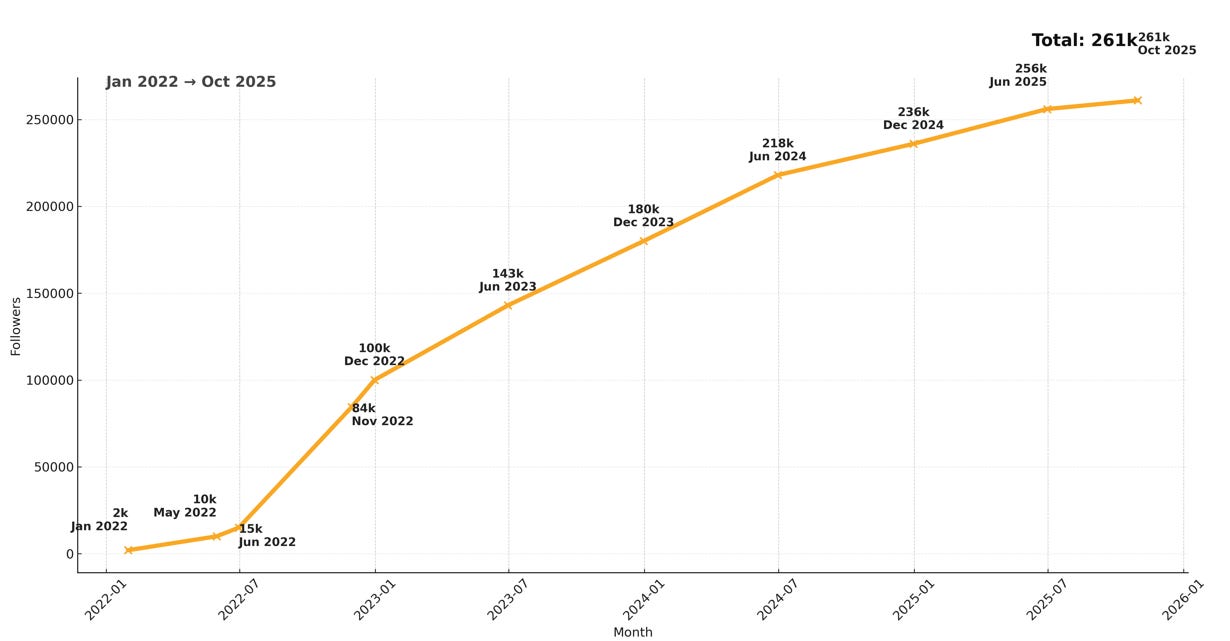
Yet, the follower count was less important than the impact, opportunities, and connections that I created along the way.
3. Steps to grow a LinkedIn audience from scratch
Here are the steps you can follow to grow your audience from scratch.
Step 1: Positioning
Positioning was the foundation of all this profile work. I defined exactly who I wanted to serve and the problem I would solve for them. In my case, I help software engineers advance their careers (the who) by sharing proven insights on tech leadership and architecture (the what and how). This clarity made my profile cohesive; every element (headline, about, posts) told a consistent story of “CTO who mentors engineers.”
For your profile, ask yourself the same four questions:
What problem do I solve?
Who has that problem?
What makes my perspective different?
What do I want to be known for?
Answering these will give you a positioning line and content focus that sets you apart.
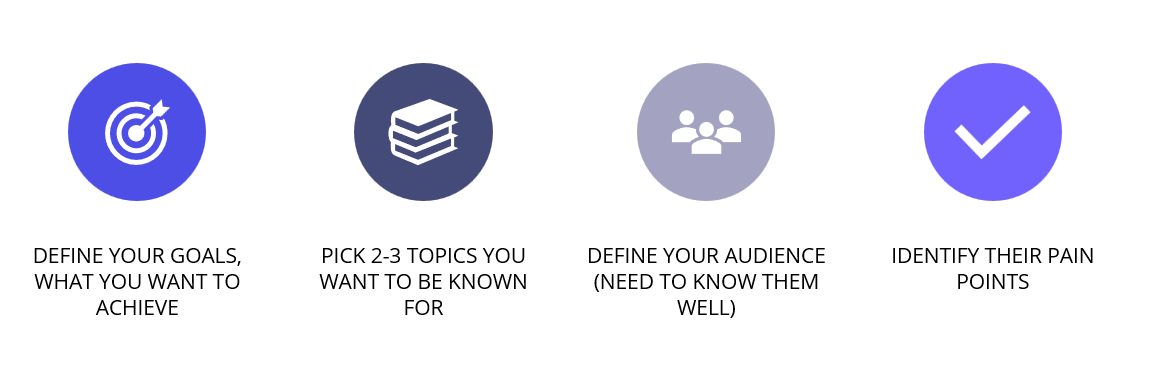
When you make it, then you define your concrete goals, pick 2-3 topics you want to be known for, and define your audience. This will help you later to identify their pain points and write about how to solve them.
Step 2: Set up your profile
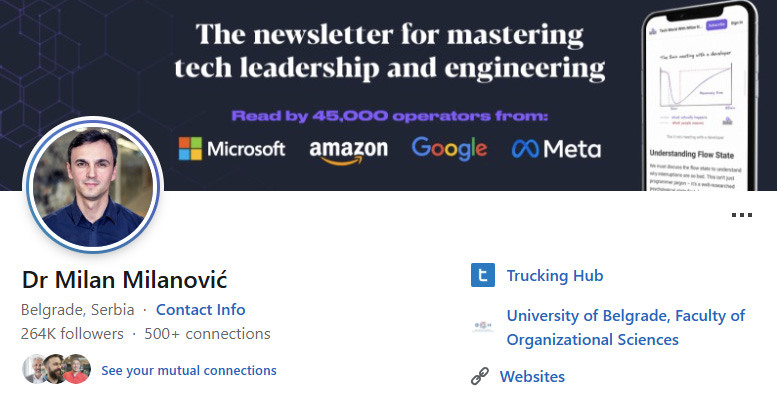
Now, when we properly position ourselves, we need to do the profile optimization steps that make a difference:
Crystal-clear headline. Most people just list their job title, but the headline should state their value proposition. Craft a 220-character headline that combines what you do, who you help, and how you help them. (Formula: “What you do | Who you help | Outcome”). For example, rather than “CTO at TechCorp”, a headline could be “CTO mentoring developers into architects | Writing about cloud & leadership | 20+ engineers coached.” This tells people exactly why they should follow or connect with you.
Branded banner. Instead of the default blue background, create a simple graphic with a tagline about you and a URL. The banner is prime real estate to visually convey who you are, whether it’s “Cloud Architect | Speaker | Helping you master AWS” or highlighting a key achievement. Don’t leave it blank. Use it to instantly communicate your brand or direct viewers to something valuable (like your blog or course).
Storytelling “About” section. A structure that works is: Present – Past – Value – Call to Action. For example, I opened with what I do now (“CTO and writer helping engineers grow”), then told a brief story of feeling invisible despite 15 years in tech, and how sharing on LinkedIn changed my career. I conclude with how I can help others do the same, and a call to action to join my newsletter. The key was a hook in the first two lines (since that’s what shows before “see more”), and an authentic tone. Try to keep paragraphs short and skimmable.
Featured and extras: Use the Featured section to showcase your best products, posts, and articles. Here I added links to my newsletter and course landing page. Additionally, I updated the Experience section to focus on accomplishments and the unique credentials that give me authority (e.g., by mentioning that I led cloud migrations impacting millions of users). This is what gives you credibility: a big company you worked at, a PhD, a major project, or even a personal story that shows your expertise.
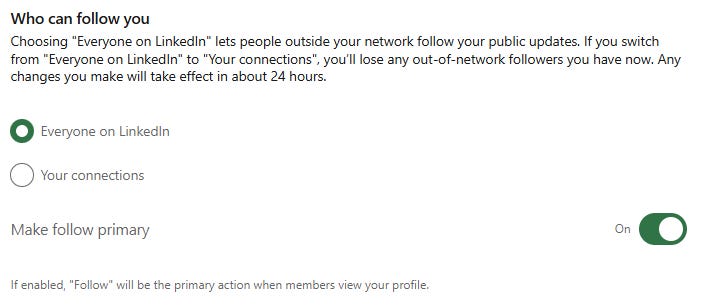
And also don’t forget to enable Creator mode. When you enable it, the Follow button will be the default, and people will be able to follow you without connecting.
Step 3: Defining your content pillars
With the profile in shape, the next challenge is showing up consistently on the feed. Occasional posting will not move the needle, so we need a sustainable Content System (sometimes dubbed a “Content OS”).
To this end, I designed a system that enables publishing 3-5 times per week without burning out. But before we start writing, we need to decide on our topics or content pillars first.
The suggestion is to choose 2-3 core themes to write about repeatedly. These were the topics you want to be known for. For me, the pillars were software engineering/architecture, engineering leadership/career growth, and cloud computing.
Sticking to a few pillars helps ensure that content is relevant to our target audience (developers and tech leads) and also makes idea generation easier.
With pillars set, you have a filter for your content.
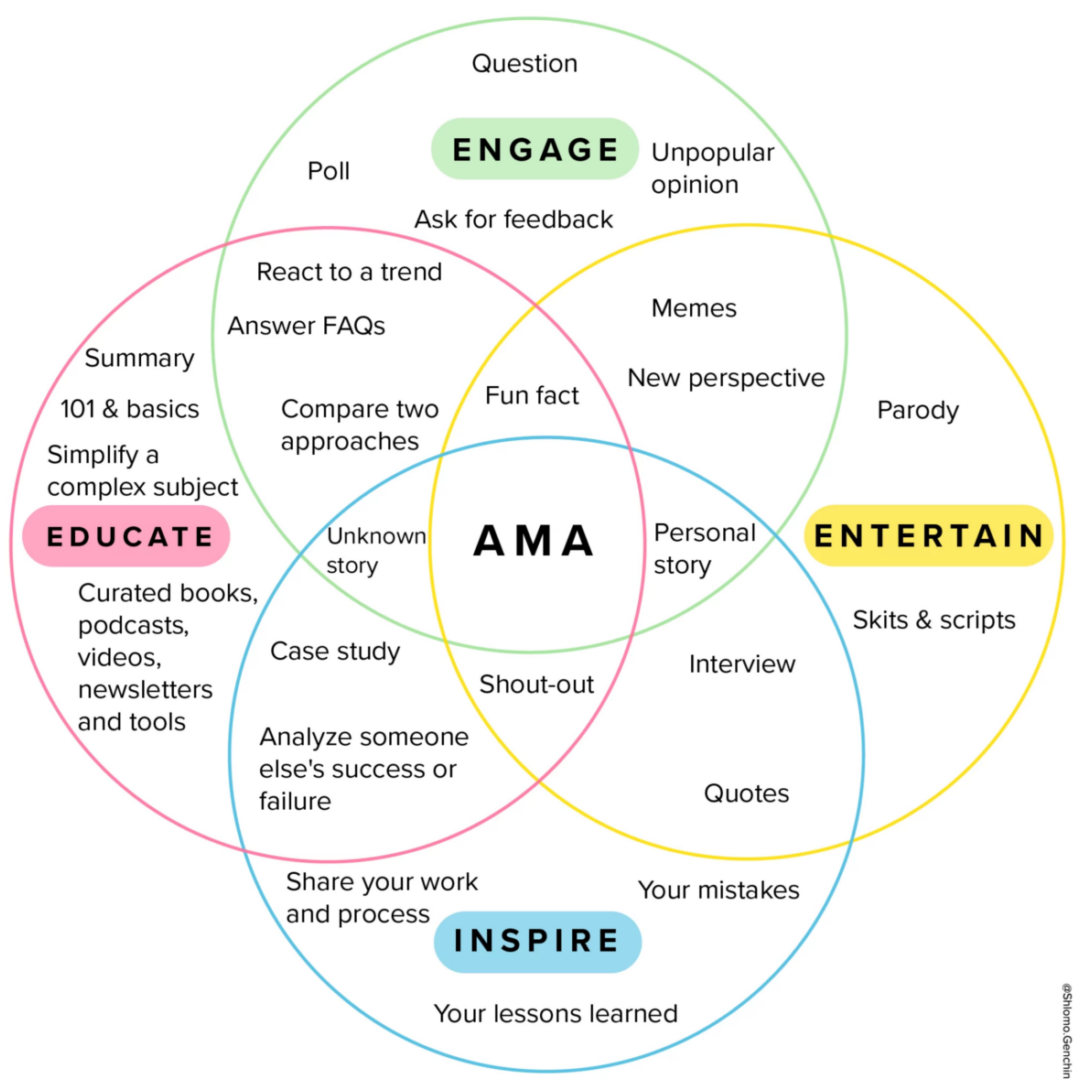
Step 4: Brainstorm a Content Matrix
To generate a flood of post ideas, you can use a simple but powerful technique: a grid of topics vs formats. For example, you can list your content pillars and a handful of effective post formats/angles (e.g., how-to guides, inspirational stories, contrarian takes, comparisons, “X vs Y”, present vs future trends, etc.).
Here is one example:
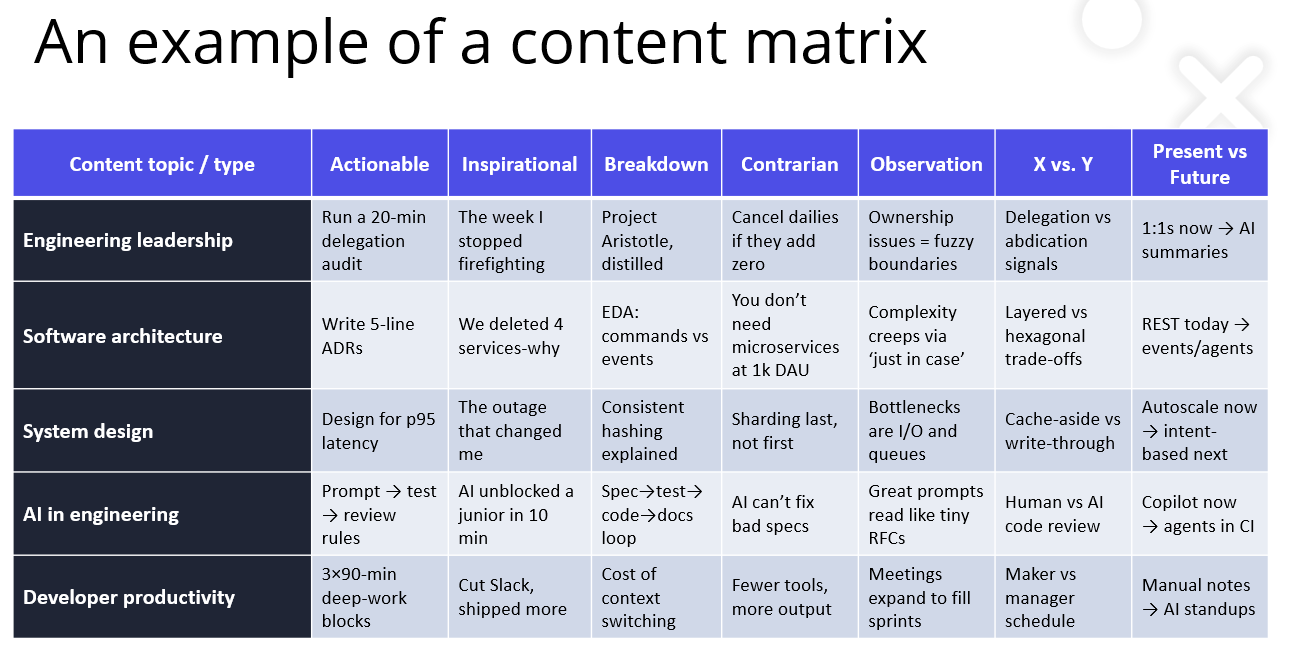
The content matrix ensures you never run out of content and keeps your feed varied.
In my course we learn how to make this matrix by using AI tools.
Step 5: Use a Content Framework
Consistency isn’t just about posting often; it’s also about format consistency. I use a few proven post structures that make writing easier and ensure my content is engaging.
We’ll dive into these in the next section (Storytelling Frameworks), but having go-to templates (like a story post format, a list post format, etc.) lets me draft posts faster.
For instance, if today is a “technical tips” post, we might default to a list of do’s and don’ts with a quick intro and summary (framework: Hook → List → Summary → CTA). If tomorrow is a narrative, we would use this Story → Lesson template.
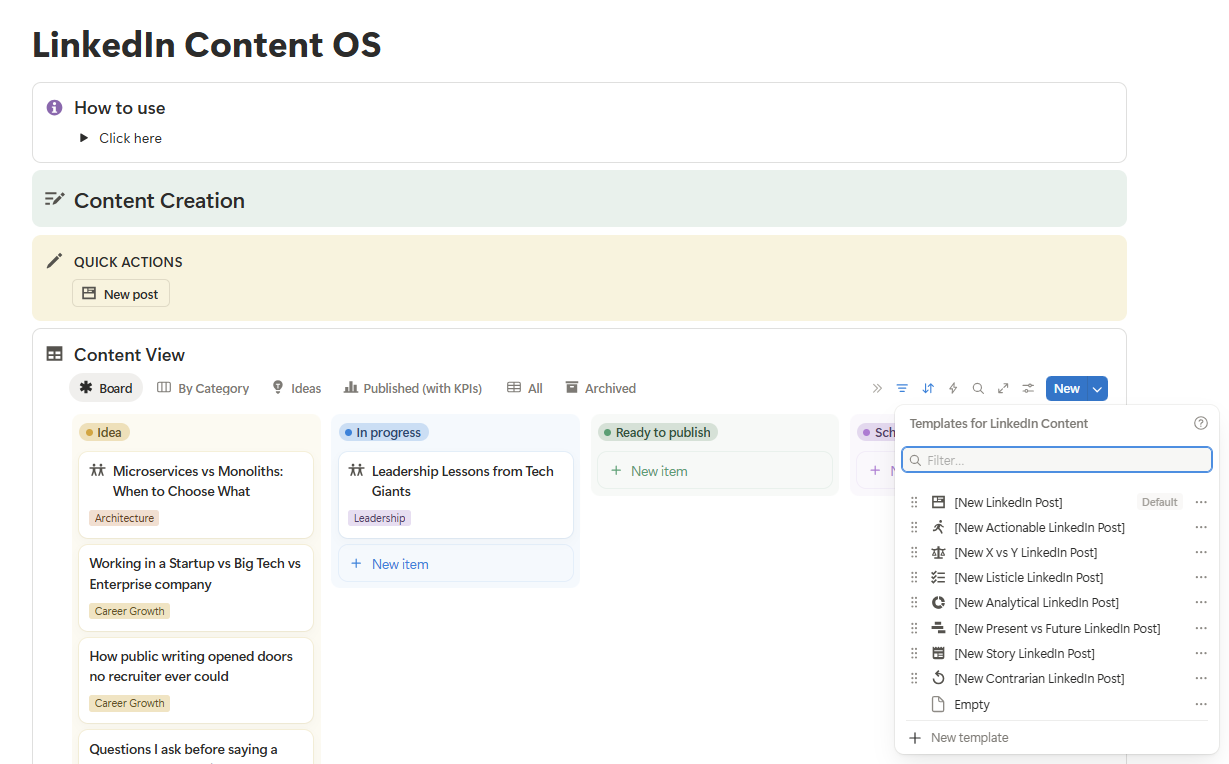
All of these templates are available in my LinkedIn Content OS.
Step 6: Storytelling and post frameworks
Technical folks often struggle with storytelling, but I found it to be a superpower on LinkedIn. People love stories, so tell one story with one clear lesson.
Early on, I shifted from just sharing tips in a dry manner to wrapping them in relatable anecdotes – essentially turning my posts into mini case studies or personal stories. Each story post followed a simple structure: Story → Lesson → CTA.
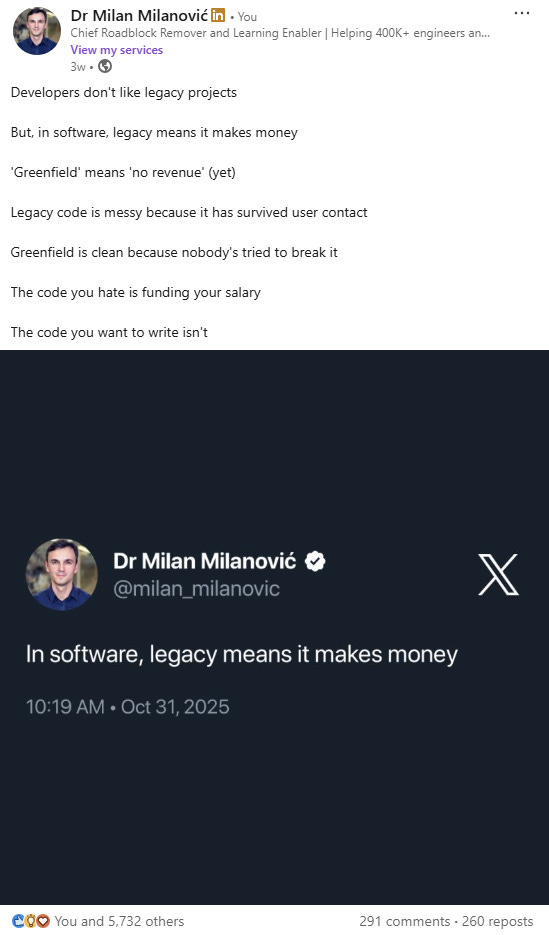
For example, I wrote about a time I turned down a $200K job offer (story) and what it taught me about aligning career moves with personal values (lesson), then invited others to share if they’ve faced similar decisions (call-to-action). This post got massive engagement because it was human and specific, not just “advice in a vacuum.”
Beyond stories, I rotate through several post frameworks. These are like templates that make your content punchier and help you avoid staring at a blank page.
Here are a few go-to LinkedIn post types (and how you can use them as an engineer):
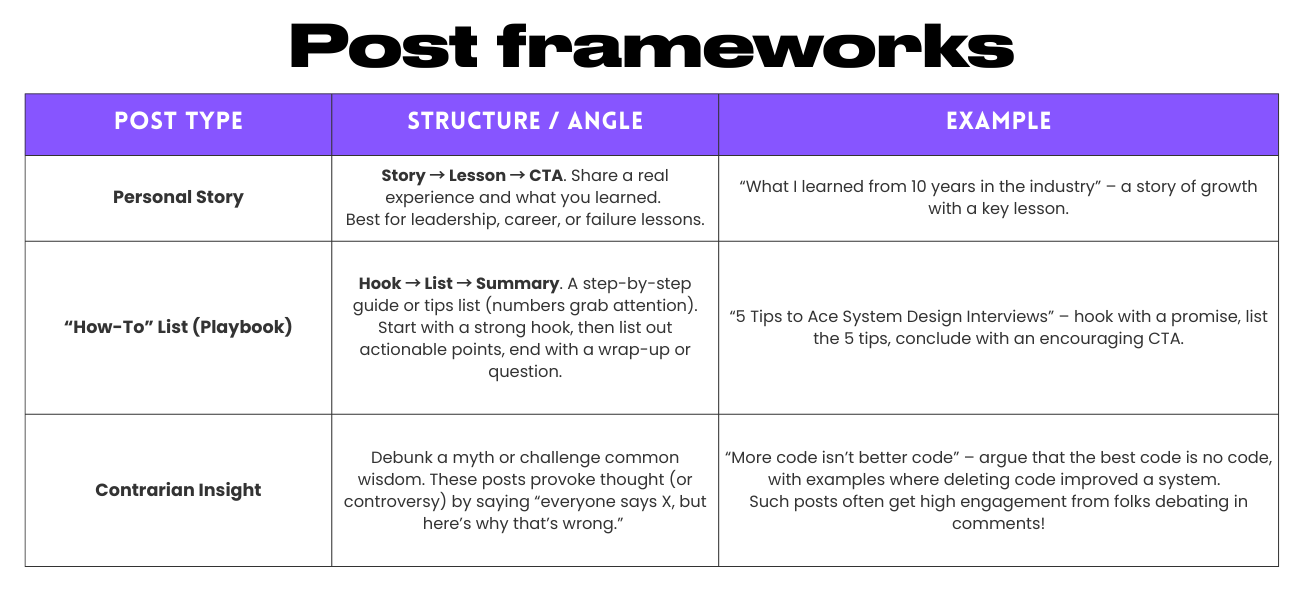
Notice how each framework delivers value or insight and often includes a story or example. I cycle through these to keep my feed fresh.
One day, I would drop a list of actionable dev tips; another day, a personal story about a mistake; then a contrarian take on a popular tech practice. This mix prevents audience fatigue and positions you as a multidimensional thinker.
Importantly, I always write in a conversational, first-person tone, as if mentoring a colleague over coffee. No corporate jargon or “resume speak.” Engineers appreciate candor and clarity.
My posts often include little storytelling details (to paint a scene) and then break down the takeaways. I also make my content skimmable, using short paragraphs, bullet points, or emojis to create visual breaks.
Finally, I almost always end posts with a CTA (Call to Action) – a question or prompt that invites the audience to engage. Something like “Have you experienced this?”, “Agree or disagree?”, or “What would you have done?”. This not only drives huge comment threads (boosting the post in the algorithm) but also turns posts into conversations where everyone can learn.
Step 7: Establish a posting cadence
You should treat LinkedIn like a publication with a regular schedule and be committed to posting nearly every weekday. In fact, my weekly content calendar often looked like this:
4 technical/industry posts
1 fun/relatable post
1 personal development/leadership post,
1 “promo” or community post (e.g., inviting people to my newsletter).
For example: Monday to Thursday, I share tech insights or stories; Friday, something light or humorous about work culture; Saturday, a deeper personal growth lesson; and maybe Sunday, a short motivational note. This mix kept different segments of my audience engaged and showcased multiple sides of my personality.
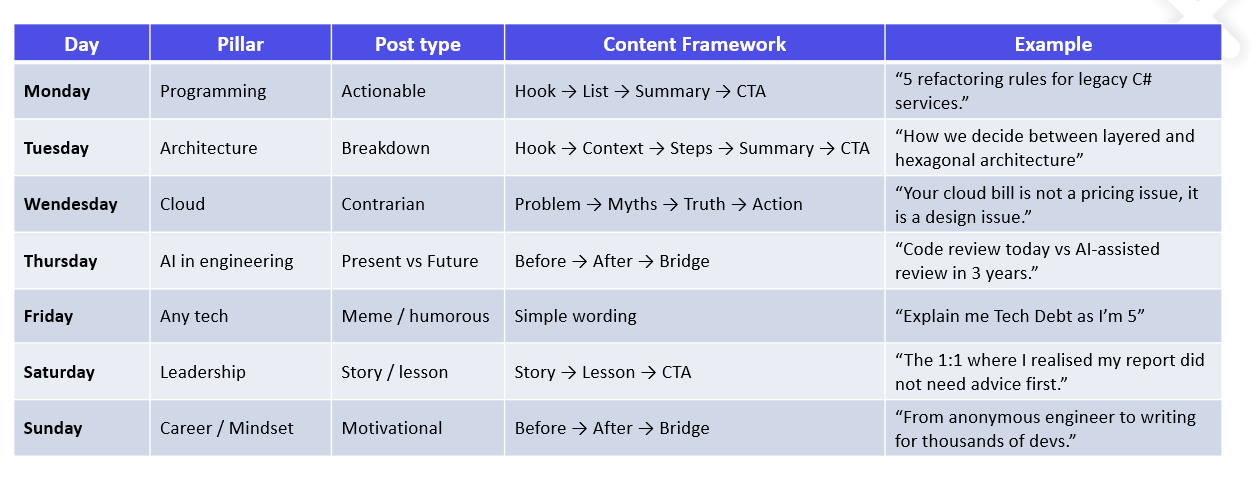
You don’t have to post daily, but consistency is key, whether it’s twice a week or five times. Choose a sustainable rhythm. Tools like scheduling software (Typefully, Buffer, etc.) can help you queue posts in advance.
Step 8: Batch and reuse content
An efficiency hack you can employ is batch-creating content. Instead of writing every morning under pressure, you can set aside a block of time to draft multiple posts at once (when ideas are flowing). Many top creators use this batching method to stay ahead.
You should also not be shy about repurposing: a tweet that performed well on X (Twitter) might be expanded into a LinkedIn post, a LinkedIn post that resonated might be repurposed as a newsletter section, and so on. This “create once, publish everywhere” mindset means each idea works harder for you.
In fact, one of my writing tricks (called Lean writing) is to test ideas on Twitter first (where the bar for virality is high and feedback is instant) and then bring the best ones to LinkedIn with more polish.
Step 9: Engaging with the Tech community
Posting great content is only half of the LinkedIn game. The other half, which many engineers overlook, is actively engaging with others. This means commenting on others’ posts, replying to every comment on your own posts, and generally being visible in the community.
In the early days, before you get a large audience, you can grow by commenting on influential people’s posts. You should follow top voices in tech leadership and be one of the first to leave a meaningful comment when they post. This tactic is golden for newcomers. By engaging on popular posts (authentically, not spammy), you “borrow” the poster’s audience, people see your comment, and if it’s insightful, they visit your profile.
Another engagement routine you should follow is being active on your own posts. When you do post, don’t drop it and disappear. The first hour after posting is “golden hour”, so you need to be online to reply to comments, answer questions, and encourage discussion.
This early engagement signals to LinkedIn that the post is interesting, thereby amplifying its reach. In fact, the LinkedIn algorithm heavily favors posts that get engagement in the first 60-90 minutes. Data shows every comment you receive can increase the post’s reach by about 4% in your network (and ~3% in the commenter’s network).
You should treat the comment section like a forum, responding, asking follow-up questions, and even debating politely. This dedication helped foster a loyal community. People know you’ll actually read and respond, so they’re more likely to comment. And more comments = more visibility. It’s a virtuous cycle.
Another growth move you can take is to collaborate with other creators. You can join a few Slack/Discord groups of content-creating professionals where they informally support each other (NOT engagement pods in the spammy sense, but real peers giving feedback and sometimes boosting each other’s posts). By engaging in these communities, you can expand your reach beyond your immediate followers.
If you get the chance, appear on webinars, podcasts, or LinkedIn Live sessions with others in your niche.
💡 One specific tip for busy engineers: schedule some “LinkedIn time” for engagement just as you would for coding or emails. I spend about 20-30 minutes each morning and again in the evening on LinkedIn, not mindlessly scrolling, but engaging with intent. In those windows, I’ll comment on a few posts from people I follow, respond to DMs, and review any interesting discussions.
Consistency here matters too. The algorithm notices when you’re active and will start surfacing your name more often. Plus, people you regularly interact with are more likely to see your posts (LinkedIn’s feed shows content from those who have engaged with each other before). So yes, being social pays off.
Step 10: Track analytics
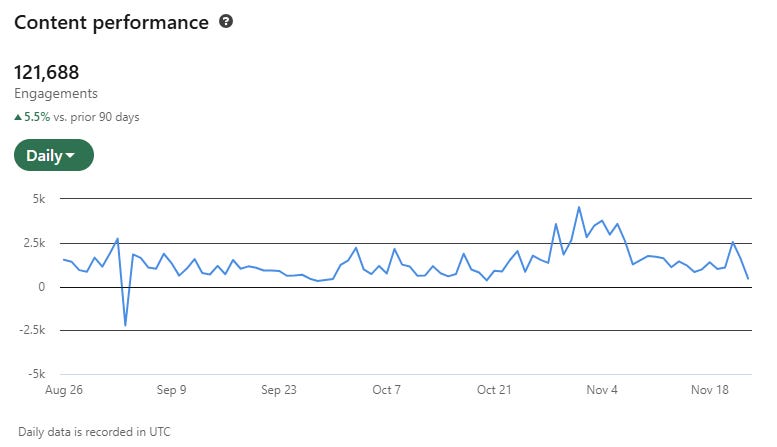
Posting and engaging with people isn't enough; you need to track the results of your work. Your Analytics section shows three numbers: profile views (your CTR), post impressions (your reach), and search appearances (your SEO).
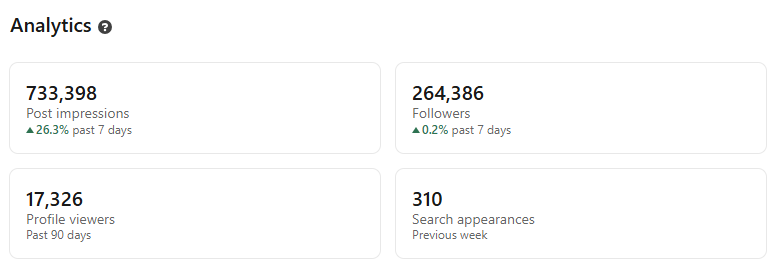
If profile views are low, your headline is probably wrong. People see your content, but don’t click your name. Test a clearer, more specific version, not “Software Engineer,” but make a position statement in terms of: I help [WHO] achieve [WHAT] using [HOW]. In the technology space, this could be anything from “Get insights into AI daily” to “I teach you to TDD in React.”
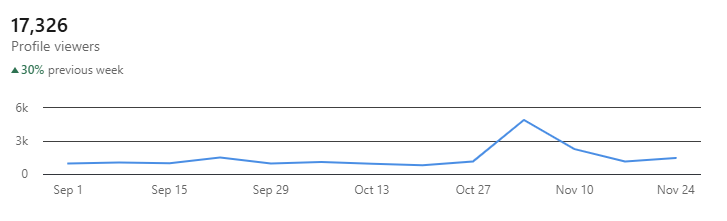
Check engagement types next. Reactions are dopamine. Comments mean you sparked a thought. Saves mean you taught something. End posts with specific questions: “Have you dealt with this database scaling issue?” beats “What do you think?”
Also, look at audience demographics. If 90% of your followers are entry-level but you want a senior role, your content is too basic. Shift to architectural trade-offs and system design.
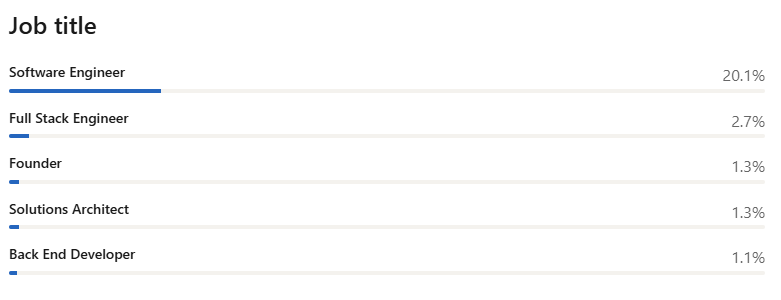
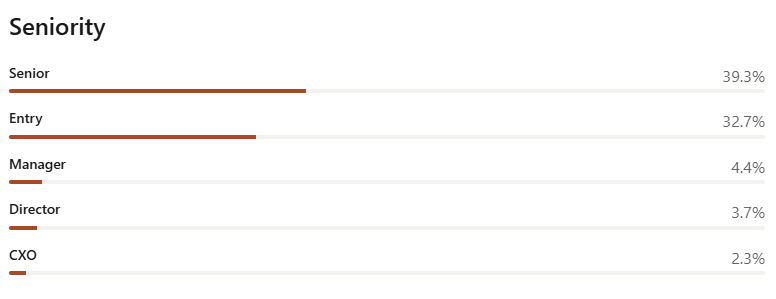
Measure monthly. If impressions are low, fix your hooks. If demographics are wrong, increase technical depth. If growth is flat, connect with people who engage with your posts.
Treat your profile like a product, measure, ship improvements, and check the logs. Double down on what works.
4. Common mistakes
Profile optimization failures remain shockingly common despite a dramatic impact on visibility. Profiles with photos receive 9x more connection requests, and users are 7x more likely to have profiles viewed with photos, yet many engineers still use low-quality images or skip photos entirely.
Algorithm penalties destroy reach for specific behaviors. More than five hashtags trigger spam filters, external links in the post body reduce reach by 25-40% (always place in the first comment instead), AI-generated content faces 30% less reach and 55% less engagement, and posting multiple times within 24 hours reduces the newest post’s reach.
Engagement bait phrases like “Like if you agree” or “Comment YES” are now systematically deprioritized. Overly promotional content, product or service sales, or face-to-face selling can result in a 70%+ reduction in reach; the platform explicitly penalizes active selling.
Engagement mistakes include posting without engaging with others’ content (you should comment on others’ posts 80% more than posting your own), not responding to comments on your posts during the critical first hour, and organizing engagement pods where people agree to like each other’s posts (LinkedIn detects and devalues this behavior).

5. The Payoff
All this effort, optimizing your profile, pumping out content, and engaging with the community, will pay off in the end. It is not just about vanity metrics; it can change your career trajectory.
The most visible result, of course, is the follower count. I grew from essentially zero audience to 260k+ followers in about 2.5 years. This made me one of the most-followed engineering voices on LinkedIn. That kind of reach means whenever I post, tens of thousands of people see it, a powerful position to be in for spreading ideas. Even if your goal isn’t 200k followers, the point is that steady posting and improvement lead to a compounding audience.
As your follower count grows, so does your industry recognition. You will start getting tagged in others' posts as an expert, invited to speak at virtual conferences, and interviewed on tech podcasts. I became known for “that CTO who shares great and free advice on LinkedIn.” This authority can be self-reinforcing: being chosen as one of the Top 100 LinkedIn creators in the world (per a Taplio ranking over the last three years) further boosts my credibility.
Even if you’re not aiming for “LinkedIn influencer” status, being recognized as a thought leader in your niche (even on a small scale) can lead to opportunities like guest blogging, panel invitations, or being consulted for advice. It’s a great feeling when peers at other companies have heard of you because of your content.
Perhaps the most tangible benefit: your LinkedIn presence becomes a magnet for opportunities. You will begin receiving weekly messages about job openings. Additionally, your consulting sideline will take off, inbound leads from people who enjoy your content and want your help with their tech strategy.
If you ever decide to change jobs or launch a startup, you now have a huge platform to tap into for hiring or marketing. Your LinkedIn audience is like a career safety net and launchpad in one.
Also, an often-overlooked benefit: creating content forces you to clarify your thinking and communicate more effectively. Explaining complex tech concepts in simple LinkedIn posts improved my ability to get to the point, useful when briefing executives or writing design docs.
Also, engaging with diverse commenters gave me empathy for perspectives outside my immediate bubble. This showed up in my leadership style, making me more patient and open to feedback.
In a sense, writing online regularly is like training in public speaking or teaching; you get more articulate over time. So even aside from the external wins, you personally grow through the process.
Perhaps the most rewarding aspect for me has been the community I cultivated. I essentially created a tribe of engineers and techies who interact not just with me but with each other. My comment sections have become mini-forums where people exchange ideas.
I mentored dozens of engineers through comments and DMs, and even launched a newsletter and Discord group off the back of my LinkedIn following, where deeper discussions happen.
For someone who started out feeling “invisible” in the industry, this sense of belonging and contributing is a huge personal win. Some of the folks I met via LinkedIn have become business partners and close friends. You can’t put a price on that.

🎁 Bonus: Prompt to create a viral LinkedIn post
This prompt makes ChatGPT follow a clear flow: hook → story → lesson → CTA, with clean spacing and punchy emphasis. Copy it, fill the blanks, and publish.
ROLE: You are a seasoned LinkedIn thought leader and professional copywriter, writing posts earning comments, saves, shares.

TASK: Ghostwrite one text-only LinkedIn post using the inputs below. Optimise for comments and shares, while staying credible.

INPUTS (fill in; facts only):
- Topic / core insight:
- Target reader:
- Credibility (facts only; bullets):
- Proof points (numbers + time window):
- Stakes (what ignoring costs):
- CTA (pick 1: Comment / Share / Follow / DM):
- Tone (pick 1: Educational / Storytelling / Data-driven / Debate-starting):
- Voice: swearing (yes/no), directness (low/med/high), humor (low/med/high):
- Personal story (optional, 3–6 lines):

HARD RULES:
- No invented metrics, clients, employers, credentials, timelines, outcomes.
- No hashtags, links, or AI mentions.
- No mention of AI. No mention of instructions.
- No ALL CAPS.
- 1–2 sentences per paragraph, frequent line breaks.
- First-person “I”, address “you”.

ENGAGEMENT CHECKLIST (must hit all):
- First 2 lines create curiosity + tension.
- Include one quotable “save/share” line (standalone line).
- Ask one comment question forcing a specific example:
  “X vs Y — which do you pick, and why? Give one real example.”
- Include 3 concrete specifics (numbers, timeframes, tools, mistakes, before/after).
- Deliver 1–3 takeaways as bullets or numbered lines.

FORMAT + FLOW:
Hook → story/problem → takeaways → CTA.

CTA FORMAT:
- Comment: ask for a word or short phrase.
- DM: “DM me the word: KEYWORD.”
- Follow/Share: one line, direct.

ANTI-FLUFF BLACKLIST (avoid):
game-changer, leverage, crush it, authenticity, unlock, synergy, “nobody talks about”, ever-changing, cutting-edge, dive deep, robust, seamless, empower, at the end of the day

QUALITY LOOP (internal; do not output steps):
1) Draft 2 hook options, each ≤ 210 characters. Pick the stronger hook.
2) Draft the full post.
3) Edit pass: cut repeats, vague claims, filler.
4) Final scan: ≤ 1,600 characters; checklist passes.

OUTPUT RULE:
- If inputs missing, list them as bullets and stop.
- Else return only the final post text.
More ways I can help you (Including Black Friday discount of 30% until the end of this week):
📚 The Ultimate .NET Bundle 2025 🆕. 500+ pages distilled from 30 real projects show you how to own modern C#, ASP.NET Core, patterns, and the whole .NET ecosystem. You also get 200+ interview Q&As, a C# cheat sheet, and bonus guides on middleware and best practices to improve your career and land new .NET roles. Join 1,000+ engineers.
📦 Premium Resume Package 🆕. Built from over 300 interviews, this system enables you to craft a clear, job-ready resume quickly and efficiently. You get ATS-friendly templates (summary, project-based, and more), a cover letter, AI prompts, and bonus guides on writing resumes and prepping LinkedIn. Join 500+ people.
📄 Resume Reality Check. Get a CTO-level teardown of your CV and LinkedIn profile. I flag what stands out, fix what drags, and show you how hiring managers judge you in 30 seconds. Join 100+ people.
✨ Join My Patreon Community and My Shop. Unlock every book, template, and future drop, plus early access, behind-the-scenes notes, and priority requests. Your support enables me to continue writing in-depth articles at no cost. Join 2,000+ insiders.
🤝 1:1 Coaching. Book a focused session to crush your biggest engineering or leadership roadblock. I’ll map next steps, share battle-tested playbooks, and hold you accountable. Join 100+ coachees.
Want to advertise in Tech World With Milan? 📰
If your company is interested in reaching founders, executives, and decision-makers, you may want to consider advertising with us.
Love Tech World With Milan Newsletter? Tell your friends and get rewards.
We are now close to 50k subscribers (thank you!). Share it with your friends by using the button below to get benefits (my books and resources).
This article comes at the perfect time, because even though I've always found the idea of 'personal branding' a bit much, your transformation from invisible to recognised expert has me wondering if my pilates practice could inspire the same dedication to building my online presence.
This is solid. After creating an audience on Medium, and LinkedIn, the upside is way too good to pass.